
Medetomidine is displacing xylazine, an industrial chemical called BTMPS has spread since mid-2024, and Western fentanyl samples were purer than Eastern ones, according to NIST’s RaDAR program.
Source: NIST news release, Oct. 8, 2026, and the underlying paper, Sisco et al., Drug Testing and Analysis, 2026
What the study found
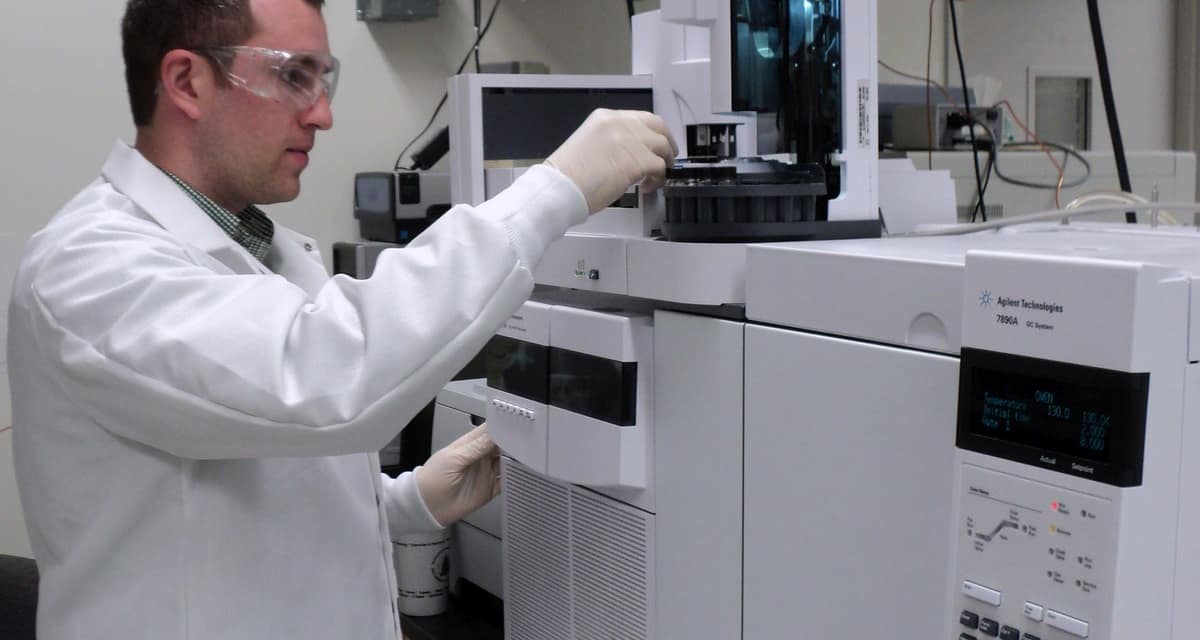
Researchers at the National Institute of Standards and Technology (NIST) analyzed drug-checking samples collected through the agency’s Rapid Drug Analysis and Research (RaDAR) program from January 2024 through June 2026. RaDAR works with public health, law enforcement, forensic science and medical examiner partners. It uses a technique called DART-MS, which identifies even trace compounds in a sample in seconds (NIST release).
The study describes an illicit fentanyl supply that is increasingly mixed, with adulterants rising and falling in cycles and moving between regions (abstract).
Key numbers and findings
- 4,563 qualitative and 1,224 quantitative results from samples collected in 17 states (abstract).
- Complexity is rising. According to NIST, early-2024 samples typically held one or two additives, and six or more compounds are now more common (NIST release).
- Sedatives are changing. Xylazine is much more common in the East than the West, and it is being replaced by medetomidine, which NIST describes as a much more potent sedative that can cause severe withdrawal.
- BTMPS has spread. This industrial chemical, used in making plastics, has appeared in both Eastern and Western samples since summer 2024.
- Local anesthetics are present. Lidocaine, tetracaine and procaine also appeared in samples (abstract).
- Purity differs by region. Western fentanyl averaged about 13% fentanyl by mass, compared with about 5% in the East. Western samples had fewer additives, but at higher concentrations.
- Stimulant contamination looks accidental. Paired concentration analysis suggests that fentanyl found in cocaine and methamphetamine likely comes from low-level unintentional contamination rather than intentional mixing (abstract).
Limits
This summary is based on the paper’s abstract and NIST’s news release. Drug-checking samples come from participating partners in 17 states, so they show what is circulating where samples are collected, not a random sample of the national supply. (That point is our observation.)
Why it matters for PDMPs (analysis)
This section is editorial interpretation. PDMPs track legally dispensed controlled substances. They cannot see what is in the illicit supply, yet the people most at risk often show up in both worlds. Data like RaDAR’s fill that gap. For states building overdose intelligence capacity, pairing PDMP prescribing trends with drug-checking signals gives a fuller picture than either source alone.
The clinical stakes are concrete. NIST notes that most of these adulterants are not opioids and need additional treatment beyond what reverses an opioid overdose. Sisco told NIST the team is modeling how additives move, for example from Philadelphia to Delaware and Maryland and then west, so health officials can get earlier warning. NIST says it plans similar work on ketamine and on a newer class of opioids called orphines.
Source
Sisco E, Pyfrom EM, Appley MG, Robinson EL, Beltran KA, Shuda SA. Trends in fentanyl adulteration from Rapid Drug Analysis and Research (RaDAR) drug checking samples, January 2024 to June 2026. Drug Testing and Analysis. Published online Oct. 7, 2026. doi:10.1002/dta.70164. PMID: 42844883.
National Institute of Standards and Technology. NIST Study Shows How the Toxic Substances Mixed Into Fentanyl Vary Across the U.S. and Change Over Time. Oct. 8, 2026.


