
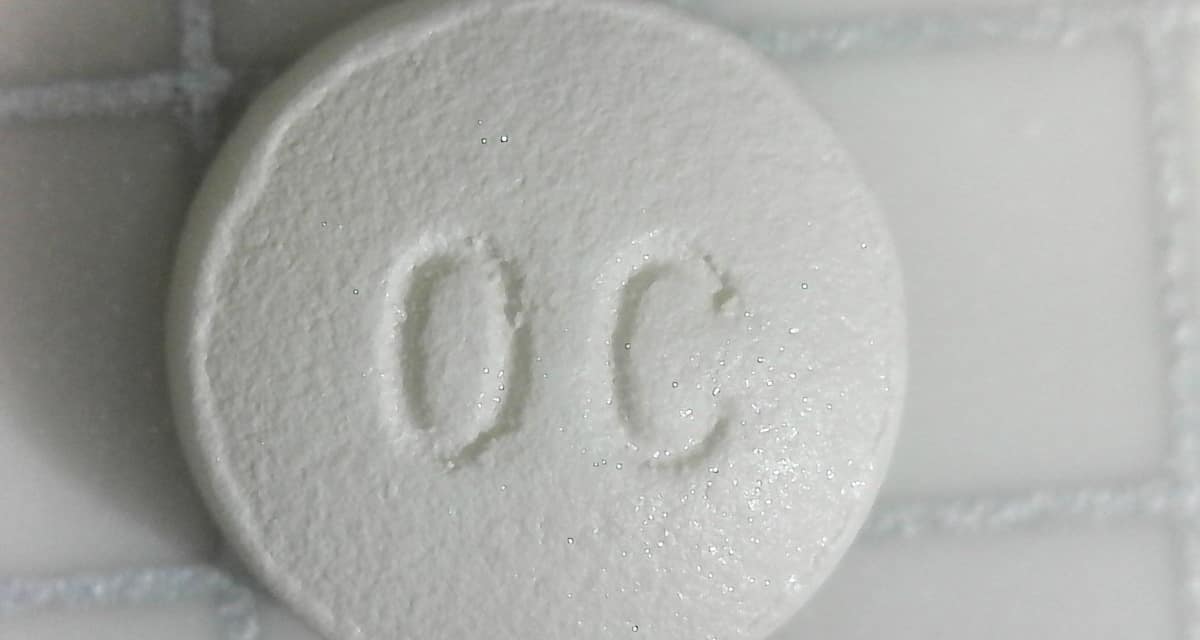
A Miami man admitted paying recruits to pose as patients, get oxycodone 30 mg prescriptions, and fill them at pharmacies owned by a pharmacist convicted earlier this year. The scheme follows a pattern prescription monitoring data is designed to surface.
Source: U.S. Department of Justice, Office of Public Affairs, Oct. 15, 2026
What happened
According to the Justice Department, Jose Llerena, 49, of Miami pleaded guilty to conspiracy to distribute a controlled substance, in a conspiracy to distribute more than 87,000 oxycodone 30 mg pills. DOJ says he worked with others, including Olushola Yusuf, a pharmacist and pharmacy owner convicted at trial earlier this year for illegally dispensing more than 300,000 oxycodone 30 mg pills.
DOJ describes Llerena as a “patient recruiter.” He paid people to pose as patients and obtain unnecessary oxycodone prescriptions from South Florida clinics and doctors, then took the recruits and their prescriptions to Yusuf’s pharmacies. Yusuf kept a list of Llerena’s recruits at her pharmacy, and Llerena paid her cash above market value for the pills. He paid the recruits, usually via Zelle, and resold the pills on the street. DOJ says he was personally responsible for distributing 3,735 pills.
No sentencing date has been set. He faces a maximum of 20 years in prison. HHS-OIG, DEA, and FBI investigated, and the case is prosecuted by the Fraud Division’s Health Care Fraud Section and the U.S. Attorney’s Office for the Southern District of Florida.
Why it matters for PDMPs
The DOJ release does not mention a prescription drug monitoring program, and it does not say what data led investigators to the scheme. What follows is analysis, not a description of how this case was built.
Recruiter schemes have a recognizable shape in dispensing data. Many unrelated people, often with no prior opioid history, start filling the same high-strength immediate-release product. They cluster at a small number of pharmacies and a small number of prescribers. Cash payment is common. Oxycodone 30 mg, the highest strength of immediate-release oxycodone tablets commonly sold, has long been a favorite of street markets for exactly this reason.
A PDMP sees every one of those fills. No single patient profile looks extreme, because each recruit may fill only a few times. The signal is at the pharmacy and prescriber level, in the share of oxycodone 30 mg in a store’s dispensing, in the cash rate, and in how many patients share the same prescriber and pharmacy pair.
Analysis
From years of running a state program, the hardest lesson in cases like this is that patient-level alerts alone will miss them. Multiple provider episode thresholds are designed to catch doctor shopping by individuals. A recruiter scheme does the opposite: it spreads the pills across many clean-looking patients who all funnel through one pharmacy.
That is why pharmacy and prescriber outlier reporting, and solicited or unsolicited reports to licensing boards and law enforcement where state law allows, matter so much. The data to see a pharmacy dispensing an outsized volume of oxycodone 30 mg to new patients is already in the PDMP. Whether anyone looks at it that way depends on program staffing, analytic tools, and clear legal authority to share.
The list Yusuf kept of recruited “patients” is a striking detail. The pharmacy knew exactly who these people were. Pharmacists are often the last line of defense, and when the pharmacist is part of the scheme, oversight has to come from data reviewed outside the store. For program administrators, this case is a good prompt to ask a simple question: when did your program last run a pharmacy-level review of high-strength immediate-release opioid dispensing?
Read the release: DOJ, Oct. 15, 2026


