
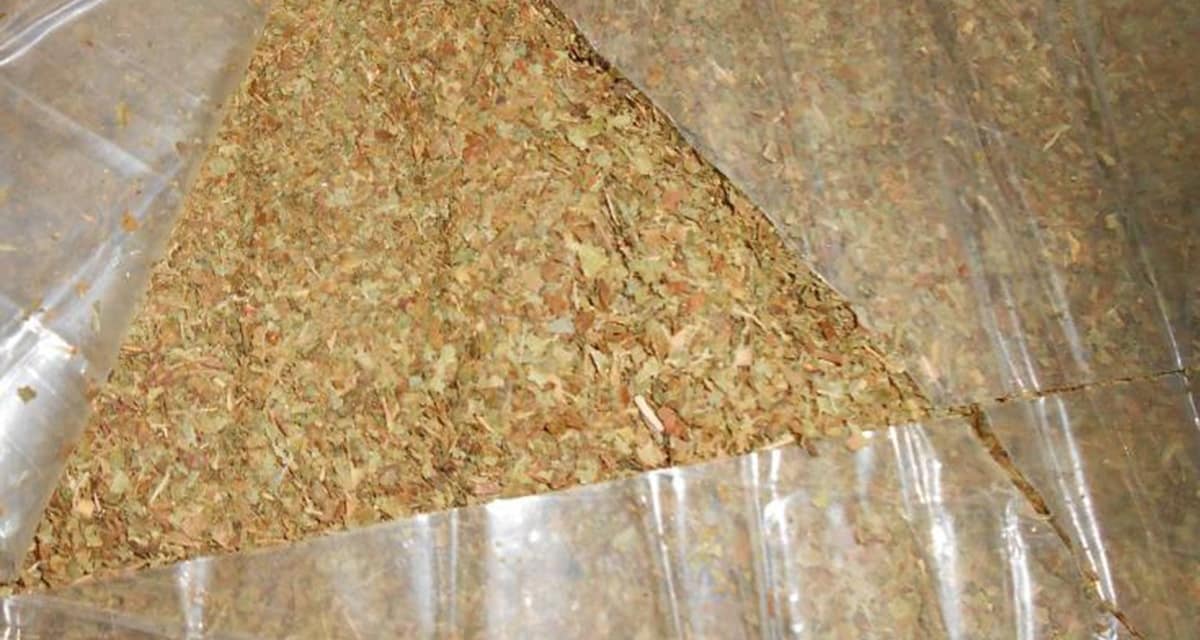
A San Francisco death linked to MGM-15, found in a product sold as “cat’s claw,” shows how a fast-changing, mislabeled opioid market sits entirely outside prescription monitoring.
What happened in San Francisco
On October 21, 2026, the San Francisco Department of Public Health (SFDPH) issued a health alert about a kratom-derived opioid that, in the department’s words, “recently caused a fatal overdose” in the city. The substance is dihydro-7-hydroxymitragynine, known as MGM-15. SFDPH describes it as “a semi-synthetic kratom-derived opioid that is not approved for any medical use.”
The San Francisco Office of the Chief Medical Examiner (OCME) detected MGM-15 in an adult who died in late September. SFDPH says this is the first known case in the city and that MGM-15 has previously been identified in overdoses in Utah and Washington.
The detail that matters most is the label. The product the decedent used was marketed as “uncaria tomentosa,” or “cat’s claw,” and sold in smoke shops and gas stations. OCME forensic toxicology confirmed MGM-15 in both the decedent and the product packaging, a brand SFDPH identifies as “Script botanicals x Maui labs.” SFDPH notes that “this packaging makes no reference to kratom or 7-hydroxymitragynine (7-OH), both of which have recently garnered public attention.” The brand differs from the products identified in Utah and Washington.
In other words, a person could read the package closely and still have no idea that it contained an opioid.
A market that moves faster than its labels
Federal action has centered on concentrated or chemically altered products: 7-OH, mitragynine pseudoindoxyl (MGPI), and semi-synthetic compounds such as MGM-15 and the related MGM-16.
It has come in stages:
- July 29, 2025: The U.S. Food and Drug Administration (FDA) recommended scheduling certain 7-OH products under the Controlled Substances Act (CSA). FDA said the effort targeted concentrated 7-OH and was “not focused on natural kratom leaf products.”
- July 6, 2026: The Drug Enforcement Administration (DEA) published Federal Register (FR) notices of intent covering 7-OH and, separately, MGPI, MGM-15 and MGM-16.
- August 26, 2026: DEA placed MGPI, MGM-15 and MGM-16 in Schedule I by temporary order (91 FR 54948), citing an “imminent hazard to public safety.” The order runs until August 26, 2028, and can be extended by one year.
- October 14, 2026: DEA withdrew the July 7-OH notice and published a new one (91 FR 65370) proposing threshold-based Schedule I control of 7-OH and MGPI, using a threshold recommended by the U.S. Department of Health and Human Services (HHS). The same day, DEA published a separate notice (91 FR 65381) to reissue the MGM-15 and MGM-16 order “without change,” a procedural step that separates them from MGPI.
Where federal scheduling stands
As of October 23, 2026:
- MGM-15, MGM-16 and MGPI are in Schedule I under the August 26 temporary order, which remains in effect unless DEA issues a new order.
- 7-OH is not federally scheduled. It is the subject of a pending notice of intent, and DEA’s October 14 notice states that no order will issue before November 13, 2026.
The proposed threshold would cover products above 1 milligram of 7-OH or MGPI per gram (solids) or per milliliter (liquids), or with a mitragynine-to-7-OH or MGPI ratio below 100. DEA acknowledges that the threshold “would permit certain products to remain in the marketplace,” and adds that “neither HHS nor DEA has made a finding that these substances are safe to use at below-threshold levels.”
States are moving too. DEA’s October 14 notice says ten states have prohibited 7-OH and 19 have enacted versions of a model Kratom Consumer Protection Act (KCPA). That is a point-in-time summary, and state law here is changing quickly.
Signals from Mississippi and Georgia
In Mississippi, two University of Mississippi students died on September 21, 2026. According to the U.S. Attorney’s Office for the Northern District of Mississippi, one was found in his dorm room with packages of “suspected kratom derivatives,” and the second was found about an hour later at a separate location. Both deaths “appeared to be consistent with a drug overdose.” A father and son who worked at an Oxford store have been charged by criminal complaint with possession with intent to distribute controlled substances. Both are presumed innocent.
The Oxford Eagle reported that a federal court filing says toxicology for both students identified mitragynine, MGM-15 and MGPI. Court documents described by Atlanta News First indicate that nitrous oxide cans were found at one student’s residence and that roommates reported he had taken a Xanax bar the day before. No public source reviewed for this article confirms an official cause of death for either student, and the role of any single substance has not been established.
In Georgia, WSB-TV reported on October 14 that Georgia Poison Center Director Dr. Gaylord Lopez said the center had received 315 calls and recorded four deaths in 2026 tied to kratom-like products, and that eight in ten calls involved hospitalization of an overdose patient. These figures come from WSB-TV’s reporting; PDMPNews did not locate a primary Georgia Poison Center data release.
Conflicting potency claims
Potency figures in public sources vary widely and compare different things:
- HHS (October 9, 2026): FDA’s review found 7-OH roughly 2 to 9 times more potent than morphine in preclinical studies, depending on the study.
- Georgia Attorney General (November 2025): cited FDA for 7-OH being “13 times more potent than morphine.”
- Dr. Lopez, to WSB-TV: described the synthetic product as “like 20 to 30 times more potent than just Kratom itself,” an estimate comparing it to kratom, not morphine.
These numbers should not be merged. Their spread is itself a sign of how little settled evidence exists.
Why it matters for PDMPs
The analysis below is PDMPNews’s. A prescription drug monitoring program (PDMP) is, in the Centers for Disease Control and Prevention’s (CDC) description, “an electronic database that tracks controlled substance prescriptions in a state.” That design explains the blind spot.
- Schedule I substances have no lawful prescriptions. MGM-15, MGM-16 and MGPI have no accepted medical use, so nothing is dispensed and nothing is reported. Scheduling gives enforcement tools, not PDMP visibility.
- 7-OH would not change the picture. The pending proposal would also make it Schedule I.
- Natural kratom sits outside the system too. Natural kratom leaf and its main alkaloid, mitragynine, are not federally scheduled, and FDA has said its 7-OH effort is “not focused on natural kratom leaf products” (U.S. Food and Drug Administration, 2025). Sold at retail, these products fall outside any reporting stream.
- Mislabeling defeats even self-report. When a “cat’s claw” package contains an opioid, the person using it may not know, a clinician cannot ask the right question, and no record exists to check.
A PDMP query on any of these decedents would likely show nothing about the substance involved. It might show prescribed opioids or benzodiazepines, which bears on polysubstance risk, but that is an inference, not a documented finding in these cases.
The surveillance that did detect these products sits elsewhere: medical examiner toxicology in San Francisco, poison center calls in Georgia, FDA Adverse Event Reporting System (FAERS) reports (DEA’s October 14, 2026 notice of intent, 91 FR 65370, counts 66 FAERS cases involving 7-OH in 2025 and 17 in 2026 as of February 27), and law enforcement work in Mississippi. For PDMP administrators, the lesson is about interpretation and partnership. A clean PDMP report does not mean no opioid exposure, and programs that already send alerts to prescribers and pharmacists are well placed to relay findings from medical examiners and poison centers.
What to watch
The next markers are a possible DEA threshold order for 7-OH and MGPI on or after November 13, 2026, the reissued MGM-15 and MGM-16 order, and official cause-of-death findings in Mississippi.
References
Centers for Disease Control and Prevention. (2024, May 7). Prescription drug monitoring programs (PDMPs). https://www.cdc.gov/overdose-prevention/php/interventions/prescription-drug-monitoring-programs.html
Drug Enforcement Administration. (2026, July 6). Schedules of controlled substance: Temporary placement of 7-hydroxymitragynine above a specified threshold in schedule I (FR Doc. 2026-13580). Federal Register, 91, 40917. https://www.federalregister.gov/documents/2026/07/06/2026-13580
Drug Enforcement Administration. (2026, July 6). Schedules of controlled substances: Temporary placement of mitragynine pseudoindoxyl, MGM-15, and MGM-16 in schedule I [Notice of intent] (FR Doc. 2026-13581). Federal Register, 91, 40909. https://www.federalregister.gov/documents/2026/07/06/2026-13581
Drug Enforcement Administration. (2026, August 26). Schedules of controlled substances: Temporary placement of mitragynine pseudoindoxyl, MGM-15, and MGM-16 in schedule I (FR Doc. 2026-17429). Federal Register, 91, 54948. https://www.federalregister.gov/documents/2026/08/26/2026-17429
Drug Enforcement Administration. (2026, October 14). Schedules of controlled substances: Temporary placement of 7-hydroxymitragynine and mitragynine pseudoindoxyl above a specified threshold in schedule I (FR Doc. 2026-20943). Federal Register, 91, 65370. https://www.federalregister.gov/documents/2026/10/14/2026-20943
Drug Enforcement Administration. (2026, October 14). Schedules of controlled substances: Temporary placement of MGM-15 and MGM-16 in schedule I (FR Doc. 2026-20942). Federal Register, 91, 65381. https://www.federalregister.gov/documents/2026/10/14/2026-20942
Georgia Attorney General’s Consumer Protection Division. (2025, November 13). Consumer alert: Carr warns of dangerous synthetic opioids flooding gas stations. https://consumer.georgia.gov/press-releases/2025-11-13/consumer-alert-carr-warns-dangerous-synthetic-opioids-flooding-gas
Regan, T. (2026, October 14). 4 overdose deaths linked to Kratom-like products in Georgia. WSB-TV. https://www.wsbtv.com/news/local/atlanta/4-overdose-deaths-linked-kratom-products-georgia/IEYSUY6KNRBEVPA4SECLRVQ2T4/
San Francisco Department of Public Health. (2026, October 21). Fatal overdose involving kratom-derived opioid. https://www.sf.gov/news-fatal-overdose-involving-kratom-derived-opioid
U.S. Attorney’s Office, Northern District of Mississippi. (2026, October 1). Father and son arrested on criminal complaint in suspected connection with the death of one of two students at the University of Mississippi. U.S. Department of Justice. https://www.justice.gov/usao-ndms/pr/father-and-son-arrested-criminal-complaint-suspected-connection-death-one-two-students
U.S. Department of Health and Human Services. (2026, October 9). HHS recommends science-based thresholds to target dangerous enhanced kratom products. https://www.hhs.gov/press-room/hhs-recommends-thresholds-enhanced-kratom-products-7-oh-mgpi.html
U.S. Food and Drug Administration. (2025, July 29). FDA takes steps to restrict 7-OH opioid products threatening American consumers. https://www.fda.gov/news-events/press-announcements/fda-takes-steps-restrict-7-oh-opioid-products-threatening-american-consumers
Secondary reporting on court filings: Oxford Eagle. (2026, October 12). https://oxfordeagle.com/2026/10/12/father-remains-jailed-son-granted-bond/ ; Atlanta News First. (2026, September 30). https://www.atlantanewsfirst.com/2026/09/30/court-documents-detail-hours-before-ole-miss-students-suspected-overdose-deaths/


